The client settles on a small stool. Natural light spills across the station. They ask for something cozy, not clichéd: a dusty rose base with a bright, precise green tip. The tech reaches for a warm cream palette and two greens for contrast.
How to plan the look
Decide the roles. Dusty rose mauve is the calm base. Pale lime or fresh grass green becomes the sharp accent. Keep the tip thin and intentional. Or use the greens as interrupted accents on alternate nails. This palette runs warm and autumnal with two fresh green notes for contrast, so balance is key.
How to set up the station and quick specs
- Gel Bottle Size: 15ml
- Finish: smooth high-gloss cream, full opacity
- HEMA-Free formula
- Thick base for smooth coverage
- Curing Time: 60–120 seconds under UV/LED lamp
- Price: $8 per bottle; set listed at $80 (may change)
Keep tools minimal. A fine liner brush, thin tape or nail guides, and lint-free wipes are enough. Use a fresh dotting tool or a square brush for crisp edges. Work on one hand at a time for clean cure workflow.
How to prep and base-apply
Work fast. Prep the cuticle line and remove shine. Apply a thin, even base using the thick base color from the set for coverage. Cure for the recommended time. Two thin coats beat one thick one. The formula hides streaks and cures glossy, so opacity is predictable.
How to place pale lime and grass-green tips
Choose tip styles: classic thin French, angled block tips, or interrupted micro-tips. For sharp lines, lay a strip of tape or a disposable guide across the free edge. Paint the green over the guide. Pull the guide away before the final cure for cleaner edge work.
- Mask: apply tape to define the free edge.
- Paint: use the pale lime for soft tips, the grass green for bold contrast.
- Thin coats: one thin pass, cure; check opacity and add a second if needed.
- Cleanup: remove any lift with a tiny brush and gel cleanser before final cure.
For freehand micro-tips, use a fine liner and a light wrist motion. For color-blocked or diagonal tips, use two angles of masking and paint the greens to sit flush against the dusty rose base.
How to use negative space and color blocking
Negative space adds modern punch. Leave a crescent near the cuticle or a thin V at the sidewall in the natural nail. Paint the dusty rose to frame the negative area. Then add a lime or grass-green tip to the free edge. The contrast reads clean and deliberate.
Color blocking works well with stacked lines. Paint a thin terracotta or taupe stripe between the dusty rose and the green tip. It creates depth without fuss. The cream, high-gloss finish keeps lines distinct and photo-ready.
How to finish and add quick salon-friendly accents
Topcoat matters. Use a glossy top to lock the cream finish. Cure fully per product guidance. Lightly wipe the inhibition layer if needed. For micro accents, add a single green dot near the cuticle or a slim grass-green edge on one or two nails as accents. These small touches sell the set without adding time.
Keep a spare bottle of the green shades at the station. They dry and cure quickly, so touch-ups are fast between clients.
How to spotlight No-HEMA Gel 821
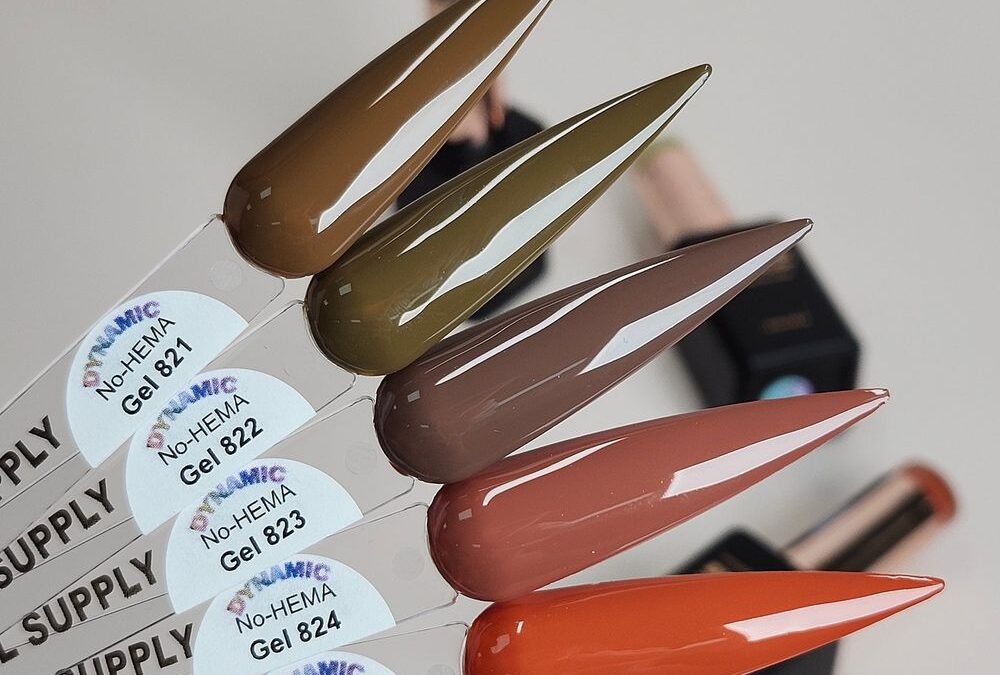
No-HEMA Gel 821 sits at the warm end of the palette. It reads as a deep chocolate brown on the swatch stick. Use it as a grounding shade in two-tone nails. A single No-HEMA Gel 821 almond nail works as a rich accent against dusty rose and lime tips. It keeps the set feeling seasonal and cohesive.
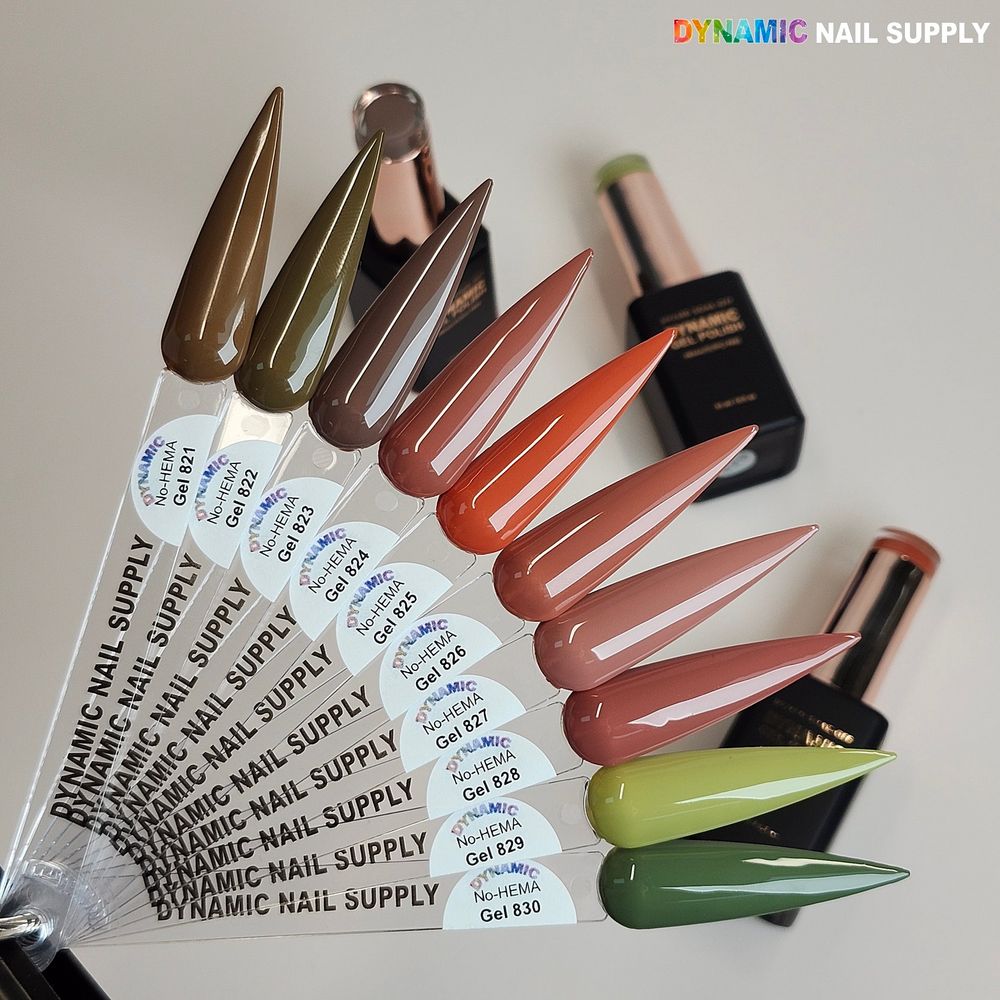
Warm browns to two fresh greens in cream finish
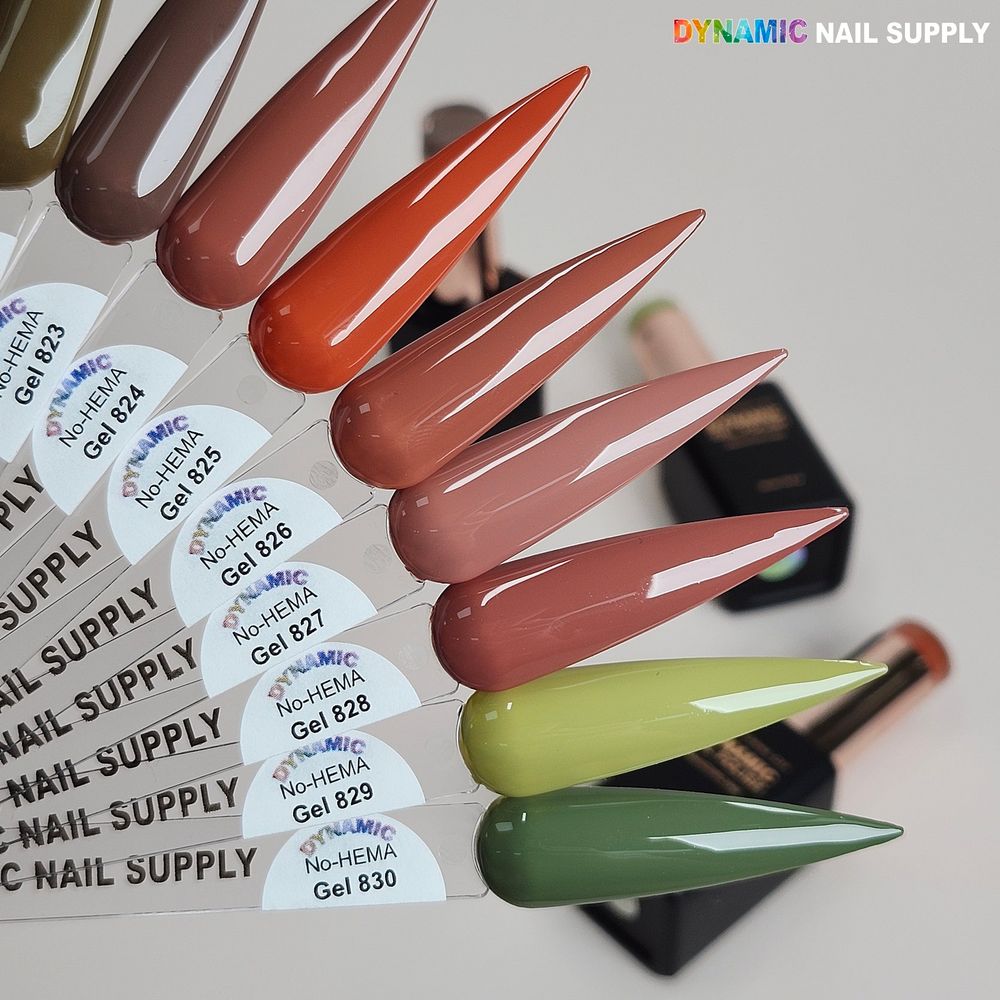
Dusty rose base with lime and grass-green accents
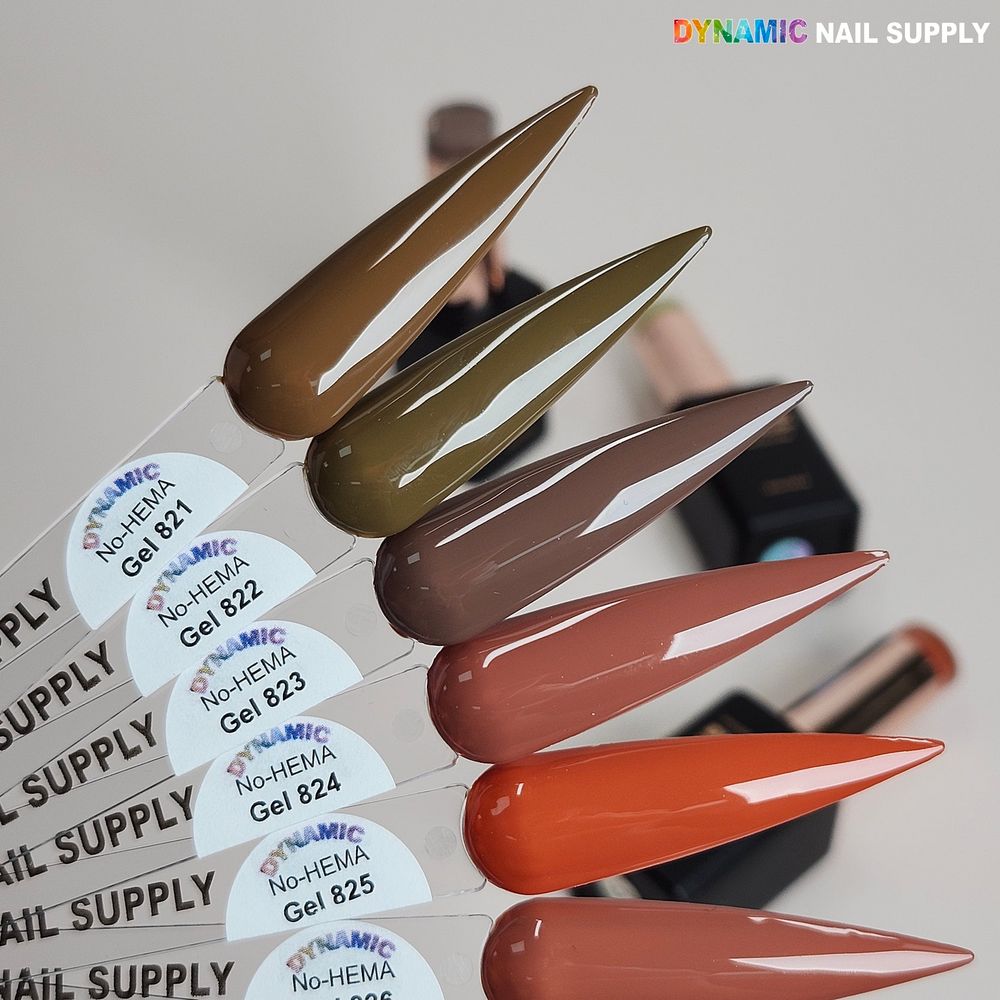
Uniform glossy swatches labeled Gel 821–830
How to handle safety and wear notes
Work in a well-ventilated area. Cure each layer fully for durable wear. The HEMA-free formula reduces occupational exposure to one common allergen, which helps with sensitive clients and techs. Store bottles upright and cap tightly to keep consistency steady.
A minimalist, balanced approach wins here. The dusty rose base keeps things soft. Pale lime or grass-green tips bring the surprise. The cream finish preserves sharp lines and photo clarity.
For an easy station-ready reference, check this product option list and availability here:
Mini FAQ
Which green reads best with dusty rose? Pale lime for subtle lift; grass green for contrast.
How many coats of color? Two thin coats for full opacity and uniform gloss.
How long to cure each layer? Follow the 60–120 second guideline per lamp and layer.