
It’s a busy table. A tech flips a glove. A client lifts a hand. The light catches a shiny shaft. The goal is small: clear the dead skin and tidy the cuticle without fuss.
How to think like a classic tech
Classic technique favors feel. A small, steady bit. Lower rpm. Slow motions. The work is careful and deliberate. For inverted corn shapes, the traditional choice was a medium head that reaches under the nail bed while staying easy to control.
Pros of the classic way are obvious. Control first. Less risk of over-filing when pressure is light. Fewer passes. Familiar motions fit older workflows.
Cons are simple too. Slower service. Not always ideal for tight, shallow cuticle folds. The classic medium head can miss tiny pockets of dead skin close to the lateral fold.
How to try the modern approach with this inverted corn design
The modern approach pairs a purpose-made tool with faster technique. The inverted corn diamond fine cuticle bit in textured silver targets precision. Its cone-shaped head and coarse diamond grit let a tech access narrow gaps under the nail quickly and cleanly.
Use recommended speeds of 10k–15k rpm for best balance between control and efficiency. The smooth metallic shaft and visible red alignment ring make quick swaps and visual checks simple during a mobile service.
How to pick the best inverted corn bit size for tight spaces
Size matters. Small heads reach tight cuticle tunnels. Medium heads move material faster. Large heads clear bigger dead-skin areas but lose fine access.
- Small head — best for precision dead-skin removal directly under the free edge and inside narrow lateral folds.
- Medium head — useful for general cuticle cleaning and prepping the nail plate before enhancements.
- Large head — suited for smoothing wider cuticle borders and finishing acrylic near the nail bed.
For mobile nail techs who need a single go-to option, a finer inverted corn head gives more entry points for detail work while still allowing reasonable service speed.
How to read the photo details and pick this exact item
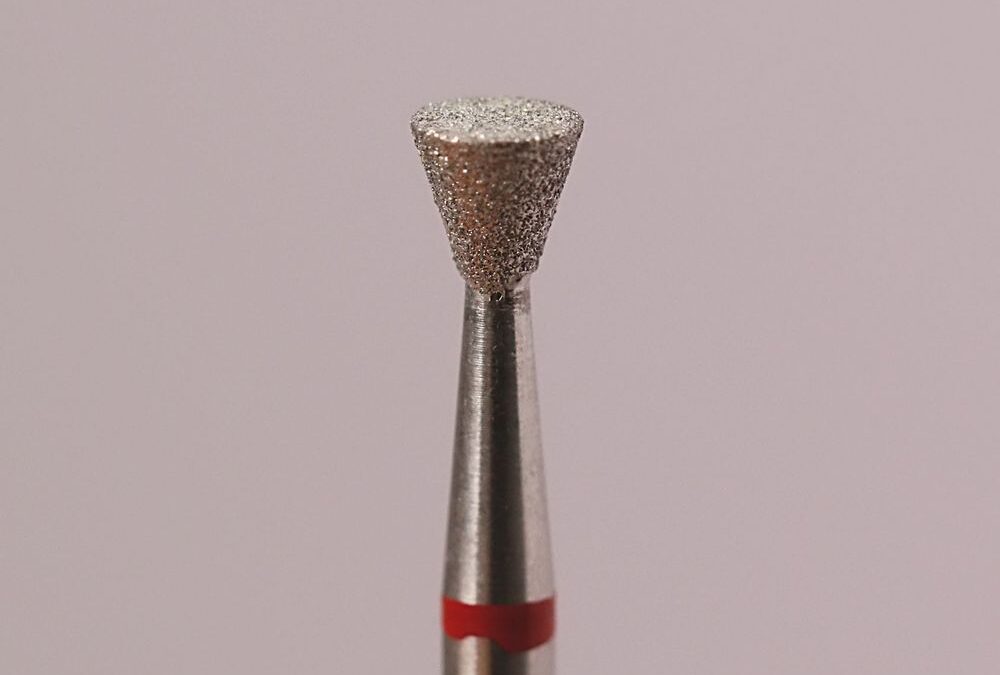
The photo shows the inverted corn diamond dead skin nails prep cleaning under bit against a pale mauve backdrop. Notice the coarse diamond grit texture on the cone head. The shaft’s polished steel gray finish and the small red ring make it easy to spot in a kit. The handpiece is partly visible, so the bit’s compatibility with standard metallic handpieces is clear.
These visual cues help a tech confirm the style and size at a glance. The textured silver head signals abrasive efficiency. The smooth shaft helps with quick handling and confident alignment.
A mobile tech can rely on inverted corn diamond bit when they need precise under-nail cleaning without changing tools between steps.
How the grit and shaft affect speed and precision
Coarse diamond grit removes material faster. That cuts service time. Fine grit (as with this bit) balances removal and safety. It produces a super smooth finish around the cuticle and reduces heat and burning risks when used with correct speed and light pressure.
The smooth metallic shaft adds two practical benefits. One, it slides into handpiece collars without snagging. Two, visual polish makes it easier to spot residue or wear during sanitation checks.
How to blend classic care with modern efficiency
Begin with classic restraint. Light pressure. Short strokes. Then introduce modern pace where safe. Increase rpm into the 10k–15k range for bulk removal, drop to the lower end for final shaping. The inverted corn shape excels at switching from coarse accesses to fine corners with minimal tool change.
Mobile setups gain most. A single multi-purpose bit reduces kit weight and speeds transitions between services. The small red ring helps find the right bit quickly under a portable lamp.
How to maintain safety and tool care
- Follow the recommended speed. 10k–15k rpm keeps control and reduces heat buildup.
- Use light pressure. The fine grit is designed to avoid burning or cutting when used correctly.
- Clean and sterilize according to salon protocol. Inspect the textured head for clogging or wear.
Price note: this textured inverted corn bit is listed at $6.98 but prices may change.
How to finalize a choice before buying
Decide the top priority. Precision for narrow tunnels. Speed for higher volume. Or a balanced multi-use head for mixed services. If precision is primary, favor a finer, smaller inverted corn head. If throughput is the goal, pick a slightly larger head but take care near the cuticle.
Quick specs
- Design: Inverted corn / cone-shaped diamond head
- Finish: Coarse diamond grit head; smooth metallic shaft and handpiece
- Visual cue: Small red alignment ring on shaft
- Recommended drill speed: 10k–15k rpm
- Use: Cuticle area cleaning, dead skin cleaning, nail preparation
End with a clean finish. Keep strokes short. Keep pressure light. The right head size makes the rest simple.
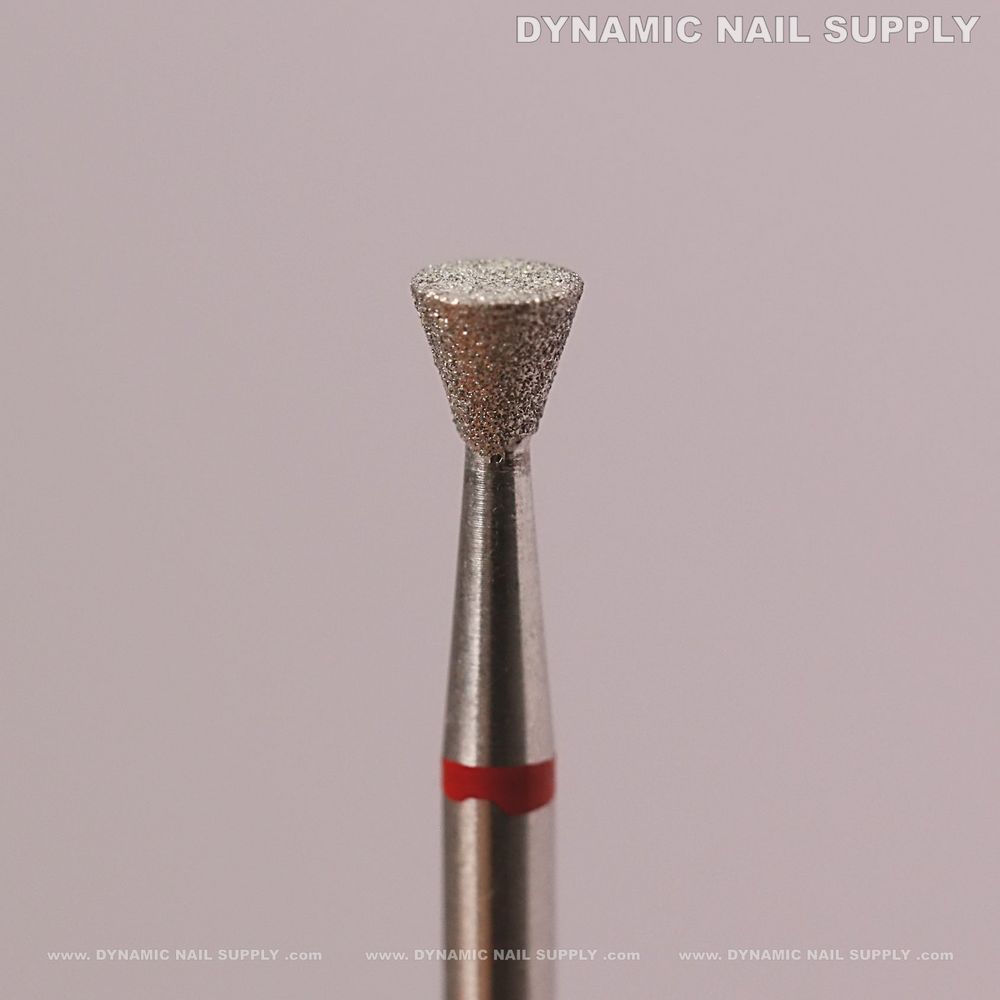
Close-up of the inverted corn diamond head
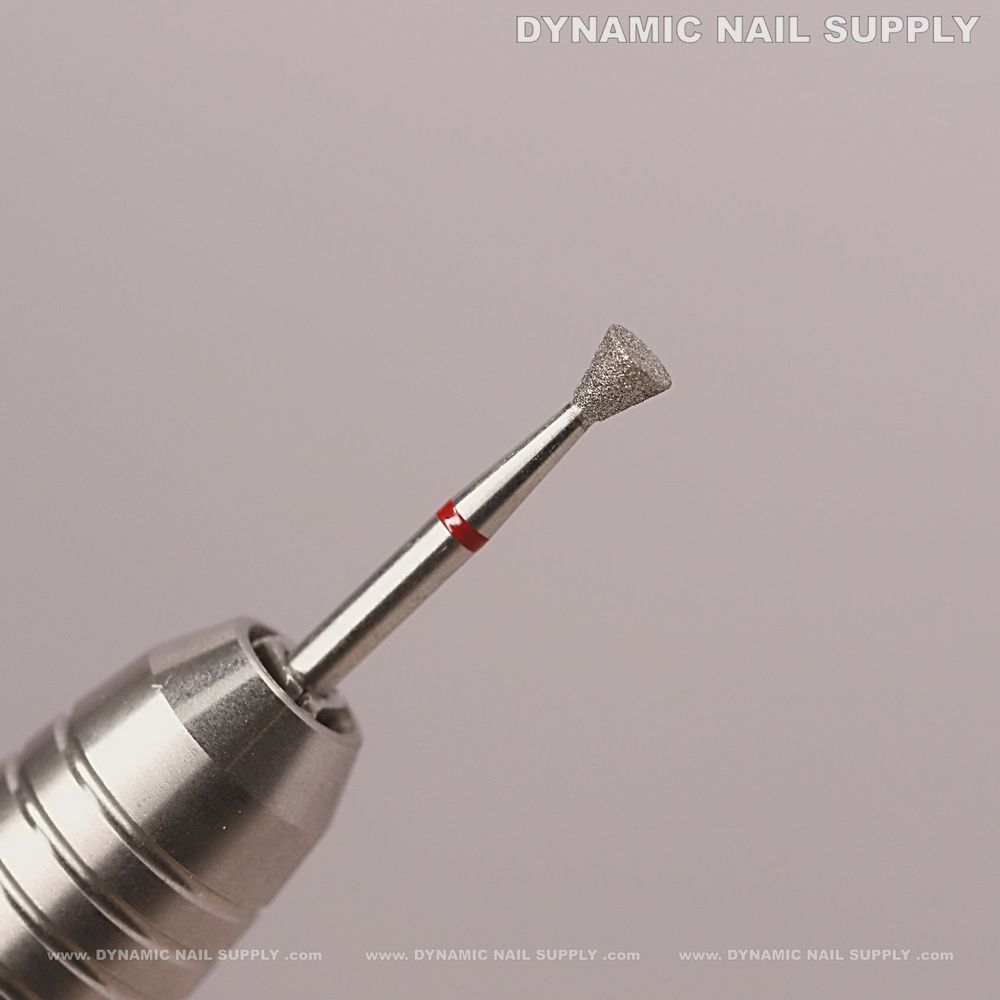
Red ring and smooth shaft visible on the bit
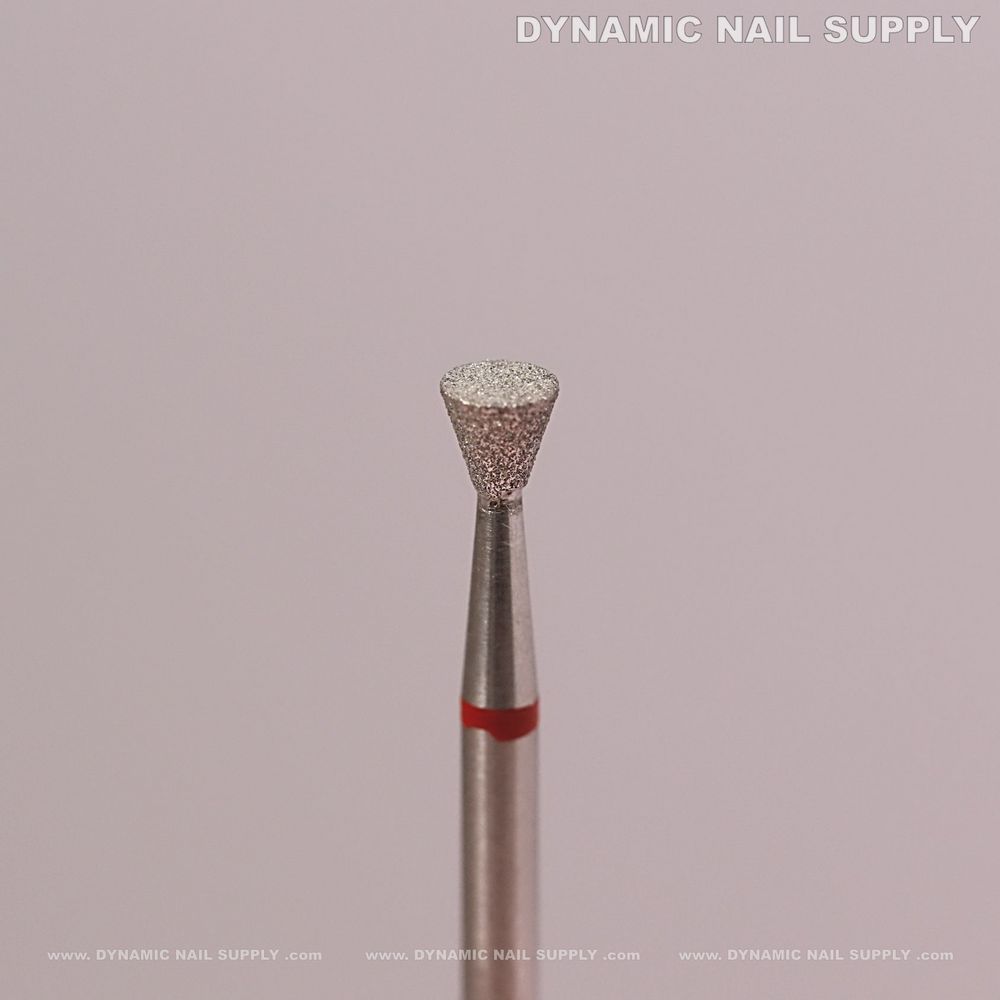
Coarse grit head set against pale mauve background
How to wrap up: mini FAQ
Q: Which size reaches shallow lateral folds best? A: A small inverted corn head provides the best access.
Q: Can the bit be used both directions? A: Yes. The design works clockwise and counter-clockwise.
Q: How fast should a mobile tech run this bit? A: Stay within 10k–15k rpm and use light pressure.